
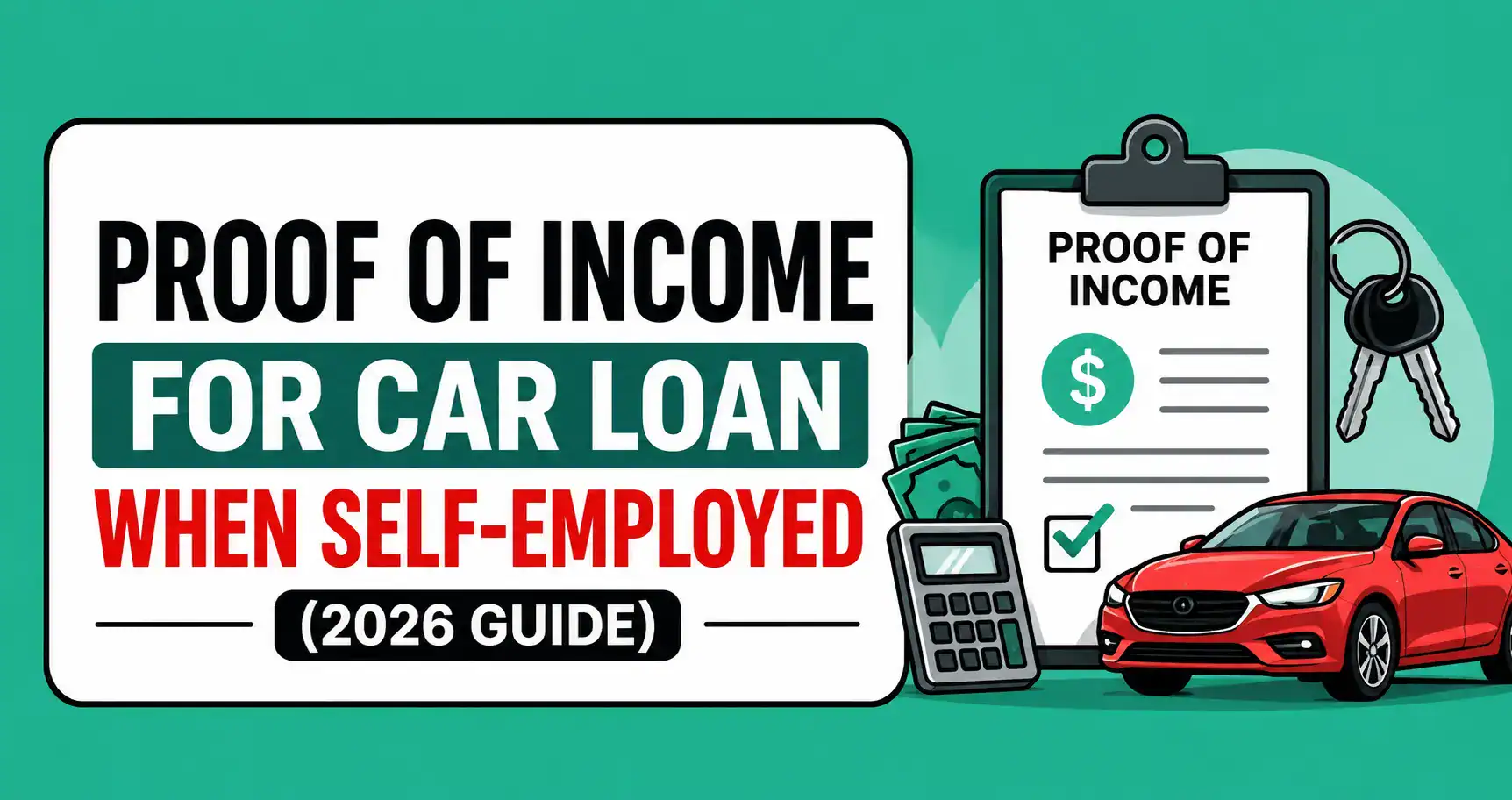
Applying for a car loan but don’t have a W-2 to hand over? Here’s what actually works: proof of income car loan self-employed applicants typically need 1-2 years of tax returns with Schedule C, 2-3 months of bank statements, and sometimes a profit and loss statement, since most auto lenders want a longer income history than a landlord does. Below is the exact document list, how much history you’ll need, and how to get approved without a traditional paycheck.
Why Car Loans Are Pickier Than Rental Applications
If you’ve already rented an apartment as a self-employed person, you might expect a car loan to work the same way. It doesn’t, and it catches a lot of people off guard. Auto lenders tend to ask for more documentation than landlords, mostly because a car loan is a longer financial commitment, usually 36 to 72 months, and the lender is taking on more risk than a one-year lease.
That means proof of income for a car loan when self-employed usually needs to go a bit further than what worked for your last apartment application. This guide breaks down exactly what auto lenders expect from self-employed borrowers in 2026, how far back your documents need to go, and how to put together an application that gets approved on the first try.
If you haven’t already, it’s worth reading our broader guide on self-employed proof of income documents for the general picture, this guide builds on that specifically for auto financing, where the requirements are a little stricter.
What Counts as Proof of Income for a Car Loan When Self-Employed
Auto lenders generally want to see a longer, more complete income history than a landlord does. Here’s what typically makes up a strong proof of income car loan self-employed application.
- 1-2 years of federal tax returns with Schedule C. This is the document most auto lenders lead with. A single year is sometimes accepted for smaller loan amounts, but two years is the standard most lenders prefer, since it shows your income is stable rather than a one-time spike.
- 2-3 months of recent bank statements. These confirm that the income shown on your tax return is still coming in consistently right now, not just historically.
- A profit and loss statement, especially if your most recent tax return is more than a few months old and doesn’t reflect a recent increase in income. Some lenders will average your P&L with your prior year’s tax return to get a more current picture.
- 1099 forms from your clients, if you work as a contractor rather than running a broader business. These add a layer of third-party verification on top of your self-reported tax return.
- A CPA letter or accountant verification, which some lenders request specifically for self-employed applicants as an extra layer of confirmation that your reported income is accurate.
- Proof of business registration, such as an LLC filing, business license, or DBA registration, which some lenders ask for to confirm your business is legitimate and established.
How Much Income History Do You Actually Need?
This is where proof of income for a car loan when self-employed differs most from a rental application. Most auto lenders want to see at least two years of self-employment history, since a single strong year can look like an outlier rather than a trend.
If you’ve been self-employed for less than two years, it’s not necessarily a dealbreaker, but it usually means a lender will look more closely at your bank statements and current income to compensate for the shorter tax history. Some lenders also request a larger down payment from newer self-employed applicants to offset the added risk on their end.
It’s also worth knowing that lenders typically use your net income (after business expenses, as reported on Schedule C) rather than your gross revenue when calculating what you can afford. If your expenses are high relative to your revenue, your qualifying income may look lower than your total earnings, which is worth planning around before you start shopping for a car.
Step-by-Step: Applying for a Car Loan as a Self-Employed Borrower
- Pull your last two years of tax returns, including the complete Schedule C, from your tax preparer or tax software.
- Gather your most recent 2-3 months of bank statements, ideally from the account where your business income is deposited.
- Prepare a profit and loss statement covering the current year to date, particularly if your income has grown since your last tax filing.
- Collect any 1099 forms you’ve received from clients for the current or most recent tax year.
- Check whether you need proof of business registration, an LLC filing, DBA, or business license, and have it ready if your lender requests it.
- Get pre-approved before visiting a dealership. Many online lenders and credit unions offer pre-approval specifically for self-employed applicants, which lets you shop with a clear budget instead of negotiating financing under pressure.
- Be ready to explain any income gaps or dips. A short, honest note about a slow quarter or a business transition can go a long way if a lender has questions about your documents.
Common Mistakes Self-Employed Car Buyers Make
Assuming gross income is what qualifies them. Lenders look at net income after expenses, not total revenue. Estimating your budget based on gross earnings can lead to disappointment when the actual approved amount comes back lower.
Only bringing one year of tax returns. Since most lenders prefer two years of self-employment history, showing up with just one can slow down approval or lead to a request for additional documentation on the spot.
Not accounting for how write-offs affect the loan. Aggressive business expense deductions lower your tax bill, but they also lower the net income a lender sees. It’s worth weighing this trade-off before tax season if a car loan is coming up.
Applying at the dealership without pre-approval. Walking in without knowing your likely approval amount puts you at a disadvantage during negotiations. Getting pre-approved first, especially through a lender that works regularly with self-employed borrowers, gives you much more control.
Skipping the profit and loss statement when income has grown. If your business has picked up significantly since your last tax return, not providing a current P&L means the lender is only seeing older, lower numbers.
Need a legal income document for your car loan application? Our proof of income page helps self-employed borrowers put together accurate, lender-accepted income documentation, built around your real numbers, fully compliant with 2026 standards.
Comparison Table: Proof of Income for Car Loan (Self-Employed) vs. Rental Application
| Requirement | Car Loan (Self-Employed) | Rental Application (Self-Employed) |
| Tax return history | 1-2 years typically required | Often 1 year accepted |
| Bank statements | 2-3 months | 3-6 months |
| Profit and loss statement | Often requested if income changed | Helpful but less commonly required |
| Business registration proof | Sometimes required | Rarely required |
| Income calculation basis | Net income (after expenses) | Often gross deposits or net income |
What If You’re Declined for a Car Loan as a Self-Employed Applicant?
A denial isn’t necessarily the end of the process, and it doesn’t always mean your income wasn’t strong enough. A few common fixes can turn a declined application into an approved one.
Ask what specifically triggered the denial. Lenders are required to provide a reason. Sometimes it’s a documentation gap rather than an income problem. for example, a missing year of tax returns or a P&L that wasn’t included the first time.
Add a co-signer. A co-signer with strong, verifiable income can offset a shorter self-employment history or a lower net income figure, especially if you’re within a year or two of starting your business.
Increase your down payment. A larger down payment reduces the lender’s risk and can sometimes overcome a marginal income shortfall, since it lowers the total amount being financed.
Try a lender that specializes in self-employed borrowers. Some credit unions and online lenders build their underwriting specifically around self-employed and gig-based income, and may be more flexible than a traditional bank that’s used to reviewing W-2 pay stubs.
Wait until you have a stronger tax year on record. If your business is newer, sometimes the simplest fix is applying again after your next tax filing, once you have a second year of Schedule C income to show.
Frequently Asked Questions
What documents do I need for proof of income for a car loan when self-employed?
Most auto lenders want 1-2 years of federal tax returns with Schedule C, 2-3 months of recent bank statements, and sometimes a profit and loss statement or 1099 forms. Some lenders also request proof of business registration or a CPA verification letter for self-employed applicants.
How many years of tax returns do I need for a car loan if I’m self-employed?
Most lenders prefer two years of tax returns to establish a stable income trend, though some may accept one year for smaller loan amounts or newer businesses. A shorter history can still work, but it often means additional scrutiny of your recent bank statements.
Can I get a car loan with less than two years of self-employment history?
Yes, though it may require additional documentation like a larger down payment, a co-signer, or stronger recent bank statements to offset the shorter tax history. Some lenders specialize in newer self-employed borrowers and may have more flexible requirements.
Do car loan lenders use gross or net income for self-employed applicants?
Most lenders calculate qualifying income based on your net income after business expenses, as reported on Schedule C, rather than your total gross revenue. This means high business write-offs can lower the income amount a lender uses to approve your loan.
What if my income has increased since my last tax return?
A current profit and loss statement can help show a lender your updated income, especially if your last tax return doesn’t reflect a recent increase. Some lenders will average your P&L with your prior year’s tax return rather than relying on the tax return alone.
Should I get pre-approved before going to a dealership as a self-employed buyer?
Yes, this is generally recommended. Getting pre-approved through a lender that works with self-employed borrowers lets you know your real budget and interest rate ahead of time, which gives you more negotiating power at the dealership instead of applying under time pressure.
Final Thoughts
Getting proof of income for a car loan when self-employed usually means preparing more documentation than you would for a rental application, typically two years of tax returns, recent bank statements, and sometimes a profit and loss statement or business registration proof. Lenders are simply looking for a longer, more stable income history given the length of a typical auto loan.
Getting pre-approved with the right documents ready ahead of time makes the entire process faster and puts you in a stronger negotiating position. If you need help putting together accurate, lender-ready income documentation, our proof of income page can help you get there in minutes.



Add comment