
The question “is editing a paystub illegal” comes up constantly, from renters trying to qualify for an apartment, to people applying for a car loan. The answer is yes, under both federal and state law. But the law does not treat all edits the same. There is a meaningful difference between an employer fixing a payroll error and an employee altering a number before submitting the document to a lender or landlord. This article explains exactly where that line sits, what happens if you cross it, and what your legal options actually are.
Is Editing a Paystub Illegal? The Intent Rule Explained
Editing a paystub is not illegal in the same way jaywalking is illegal. It is illegal in the way that fraud is illegal, which means prosecutors look hard at what you did with it.
The law does not care about the editing software you used or whether you changed one number or ten. It cares about one thing: did you knowingly submit a document that misrepresented your income to get something you would not otherwise qualify for?
If the answer is yes, you have committed fraud. Federal prosecutors do not need to prove you succeeded. Under 18 U.S.C. § 1344, the federal bank fraud statute, attempting to execute the scheme is enough for a conviction.
That is the part most people do not realize. You can be charged even if the lender or landlord caught you before approving anything.
Federal Laws That Make Editing a Paystub Illegal
Two federal statutes cover almost every pay stub fraud case in the United States.
18 U.S.C. § 1344: Federal Bank Fraud
This is the primary statute. It makes it a federal crime to knowingly execute, or attempt to execute, any scheme that defrauds a financial institution or uses false pretenses to obtain money, funds, or property from one. A conviction carries a fine of up to $1,000,000 and up to 30 years in federal prison, per count.
The statute is intentionally broad. Courts have consistently applied it to falsified loan application documents, including edited pay stubs submitted to mortgage lenders, auto lenders, and credit unions. You do not need to be a bank employee or a career fraudster to be charged under it.
18 U.S.C. § 1014: False Statements to a Financial Institution
This statute specifically targets false statements made to federally insured lenders. Submitting an edited pay stub as part of a loan application is a direct violation. Penalties reach up to 30 years in prison and fines up to $1,000,000.
Federal prosecutors routinely stack these two charges, turning a single edited document into multiple felony counts. Each count carries its own potential sentence.
18 U.S.C. § 1343: Wire Fraud
If you submitted an edited paystub by email, through an online portal, or via any electronic means, wire fraud charges can be added on top. That statute carries up to 20 years per count. Because nearly every loan and rental application today goes through a digital system, this charge appears frequently alongside bank fraud.
State Forgery Laws
Even when federal charges do not apply, such as when the fraud targets a private landlord rather than a bank, nearly every state has its own forgery statute that covers falsified financial documents. Depending on the state and the dollar amount involved, that ranges from a Class A misdemeanor to a felony carrying prison time.
What “Editing” the Law Actually Cares About
Here is what changes the legal outcome:
- You changed the salary figure on your paystub before submitting it to a lender. This is fraud. The edit itself created a false statement you then presented as fact.
- You changed the employer name, pay period, or deduction numbers to make the document look more convincing. Same result.
- You opened the PDF in an editor and only fixed your address. If the underlying pay figures remain accurate and you have a legitimate reason, this is a gray area. You would still need to prove to any auditor that nothing material was changed. Most attorneys advise against touching your own paystub at all for this reason.
What the law focuses on is material misrepresentation. A material change is one that would affect the lender’s or landlord’s decision. Income figures, pay frequency, and employer details are always material. Font size is not.
The tool you used does not matter. Adobe Acrobat, Photoshop, Microsoft Word, a free online PDF editor, none of that affects your criminal exposure. The output and your intent do.
When Editing a Paystub Is Legal (Employer Scenarios Only)
The only person who can legally make corrections to a pay stub is the employer who issued it, and even then there are rules.
A legitimate employer correction happens when:
- A payroll error occurred and the employer needs to issue a corrected stub for the employee’s records.
- The employer documents the reason for the change.
- The original and corrected stubs are both retained.
- The employee is notified of the update.
Self-employed individuals sometimes generate their own pay stubs through a legitimate payroll service. That is legal, as long as every figure on the document reflects income they actually earned.
What is never legal is an employee taking their own paystub and changing any number on it, regardless of whether they think the change is minor.
Paystub Editing: Legal vs Illegal Scenarios at a Glance
This table covers the most common situations people ask about. Use it as a quick reference before doing anything with a pay stub document.
| Scenario | Who Does It | Legal Status | Possible Charge |
| Employer corrects a payroll math error (documented) | Employer | Legal | None |
| Employee changes their salary figure before a loan app | Employee | Illegal | Bank fraud, forgery |
| Self-employed person generates a paystub with real income via payroll service | Self-employed | Legal | None |
| Employee submits paystub with a changed employer name | Employee | Illegal | Forgery, bank fraud |
| Employer updates paystub branding or formatting only (no figures changed) | Employer | Legal | None |
| Anyone generates a paystub with inflated income | Anyone | Illegal | Bank fraud, wire fraud |
| Edited paystub submitted but rejected before lender approves anything | Employee | Still illegal (attempt counts) | Bank fraud attempt |
| Employee “fixes” only their home address on paystub | Employee | Gray area (risk present) | Potential fraud charge |
The pattern is clear. The moment an employee touches a financial figure on a paystub they did not generate, and submits it to anyone with decision-making authority, they have crossed the legal line. The law does not care whether the application went through or not.
How Edited Pay Stubs Get Caught
Detection technology has improved significantly since 2020. The same tools that make fake documents easier to create have made them easier to identify.
PDF Metadata Analysis. Every PDF file carries metadata that logs when it was created, which software created it, and when it was last modified. If a paystub was generated by ADP in March but was “last modified” by Adobe Acrobat Pro two days before you submitted it, most AI verification tools will flag it immediately.
AI Document Verification. Platforms like Inscribe and Snappt, widely used by landlords and lenders in 2026, detect manipulations in formatting, font consistency, decimal alignment, and rounding patterns. These systems do not need to spot an obvious mistake, they compare thousands of data points against known authentic documents from the same employer or payroll provider.
Direct Employer Verification. Lenders and landlords still call employers. Many now contact payroll departments directly, not HR. If your stated salary does not match what payroll confirms, the discrepancy is flagged.
IRS Cross-Reference. Mortgage lenders and many auto lenders request IRS Form 4506-C, which gives them direct access to your filed tax transcripts. If your paystub shows $90,000 in annual income and your last two tax returns show $52,000, the gap is obvious and unexplained.
What Happens If You Get Caught Editing a Paystub
The consequences depend on who you submitted the document to and how much money was involved. The table below summarizes the exposure at each level.
| Charge | Statute | Max Prison | Max Fine |
| Federal bank fraud | 18 U.S.C. § 1344 | 30 years per count | $1,000,000 per count |
| False statements to financial institution | 18 U.S.C. § 1014 | 30 years per count | $1,000,000 per count |
| Wire fraud (digital submission) | 18 U.S.C. § 1343 | 20 years per count | $250,000 per count |
| State forgery | Varies by state | 1 to 10 years | Varies |
Beyond the criminal penalties, you will also face:
- Loan denial and potential clawback of any funds already received
- Immediate lease termination and eviction if the fraud was for a rental
- A civil lawsuit from the lender or landlord for damages
- A federal or state criminal record that follows you through background checks for employment, housing, and professional licensing
- Difficulty securing any future loan, mortgage, or rental if a financial institution was defrauded
Prosecutors frequently stack multiple charges from the table above. A single edited paystub submitted through an online application can result in bank fraud and wire fraud counts running consecutively. In cases involving large loan amounts, defendants have received sentences of five or more years in federal prison.
Legal Alternatives to Editing a Pay Stub
If you are self-employed, a gig worker, or simply do not have traditional pay stubs, there are legitimate documents that most landlords and lenders will accept.
- Two years of federal tax returns. The most widely accepted proof of income. Self-employed individuals file Schedule C, which shows net business income.
- Bank statements (3-12 months). Regular income deposits from clients or employers are visible and verifiable. Most landlords accept 3-6 months.
- A profit and loss statement prepared by a CPA. For self-employed applicants, this is often more credible than a paystub because it comes from a licensed professional.
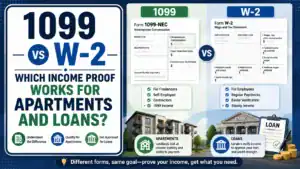
- 1099 forms. If you are an independent contractor, 1099s from clients document your income directly.
- Client contracts and invoices. These show future income streams, useful when you are newer to freelancing and do not yet have two full years of tax returns.
- A legitimate pay stub generator. If you are genuinely self-employed and need a formal pay stub, services that generate stubs based on your actual earnings are legal. The figures must match what you truly earn. Generating a stub with inflated numbers brings you right back to fraud.
Frequently Asked Questions
Is Editing a Paystub Illegal Even If I Only Change One Number?
Yes. One changed number that misrepresents your income is a material misrepresentation. If you submit that document to a lender or landlord, you have committed fraud. Federal law does not require that the edit be large or elaborate, only that it was intentional and that you submitted the document to obtain something you would not otherwise qualify for.
What If I Edited My Paystub but Never Submitted It Anywhere?
In theory, no submission means no fraud has occurred yet. However, keeping an edited paystub creates serious risk. If investigators ever review your files, they may argue you intended to use it. The safer move is to delete it and get your income documents through legal means.
Can an Employer Legally Edit a Pay Stub After Issuing It?
Yes, but only to correct an actual payroll error and only with proper documentation. Employers must retain both the original and corrected stubs. The employee must be notified. An employer who alters a paystub to help an employee qualify for a loan is committing fraud right alongside the employee.
Will I Go to Jail for Editing a Pay Stub?
It depends on who received the document. First-time offenders who submitted an edited paystub to a private landlord face state forgery charges, which may result in probation or a short sentence. If a federally insured lender was involved, federal bank fraud charges apply, and prison time is a realistic outcome. Cases involving large dollar amounts and multiple counts regularly result in multi-year federal sentences.
Is Editing a Paystub Illegal the Same Way in Every State?
The federal statutes (18 U.S.C. § 1344 and § 1014) apply uniformly across all 50 states when a financial institution is involved. State forgery laws differ in how they classify the offense, some states treat it as a felony regardless of the dollar amount, others draw the line at a specific threshold. Either way, no state has a law that makes editing a paystub for deceptive purposes legal.
What Is the Difference Between Pay Stub Forgery and Pay Stub Fraud?
Pay stub forgery refers to creating or altering the document itself. Pay stub fraud refers to using that document to obtain money or benefits through deception. Editing a paystub and submitting it typically qualifies as both, and prosecutors may file both state and federal charges simultaneously, which is why the total sentence exposure adds up fast.
Conclusion
Editing a paystub is illegal the moment you do it with the intent to deceive, and in most real-world cases that intent is obvious from the application itself. The federal bank fraud statute covers the attempt, not just the completed act. Courts have applied it to cases involving a single altered document submitted to a mortgage lender.
If you are struggling to prove income, the right move is to use legitimate documentation. Tax returns, bank statements, and CPA-prepared financials work for most applications. If you are self-employed and need a formal pay stub, a legitimate paystub generator that reflects your actual earnings is the legal path.
Read next: What happens if you get caught with fake statement?
This article is for informational purposes only and does not constitute legal advice. If you are facing fraud-related charges, consult a licensed federal criminal defense attorney immediately.
Add comment