
Getting out from under a debt feels like a win, until an unfamiliar form shows up in January reminding you the IRS wants its say too. If a 1099 C form just landed in your mailbox, you’re probably wondering why a debt you don’t owe anymore is suddenly something you have to deal with on your tax return. It’s a strange feeling: relief and confusion at the same time.
Here’s the good news, once you understand what this form is actually telling you, it stops feeling like a trap and starts making sense. Let’s walk through it properly.
What Is a 1099 C Form?
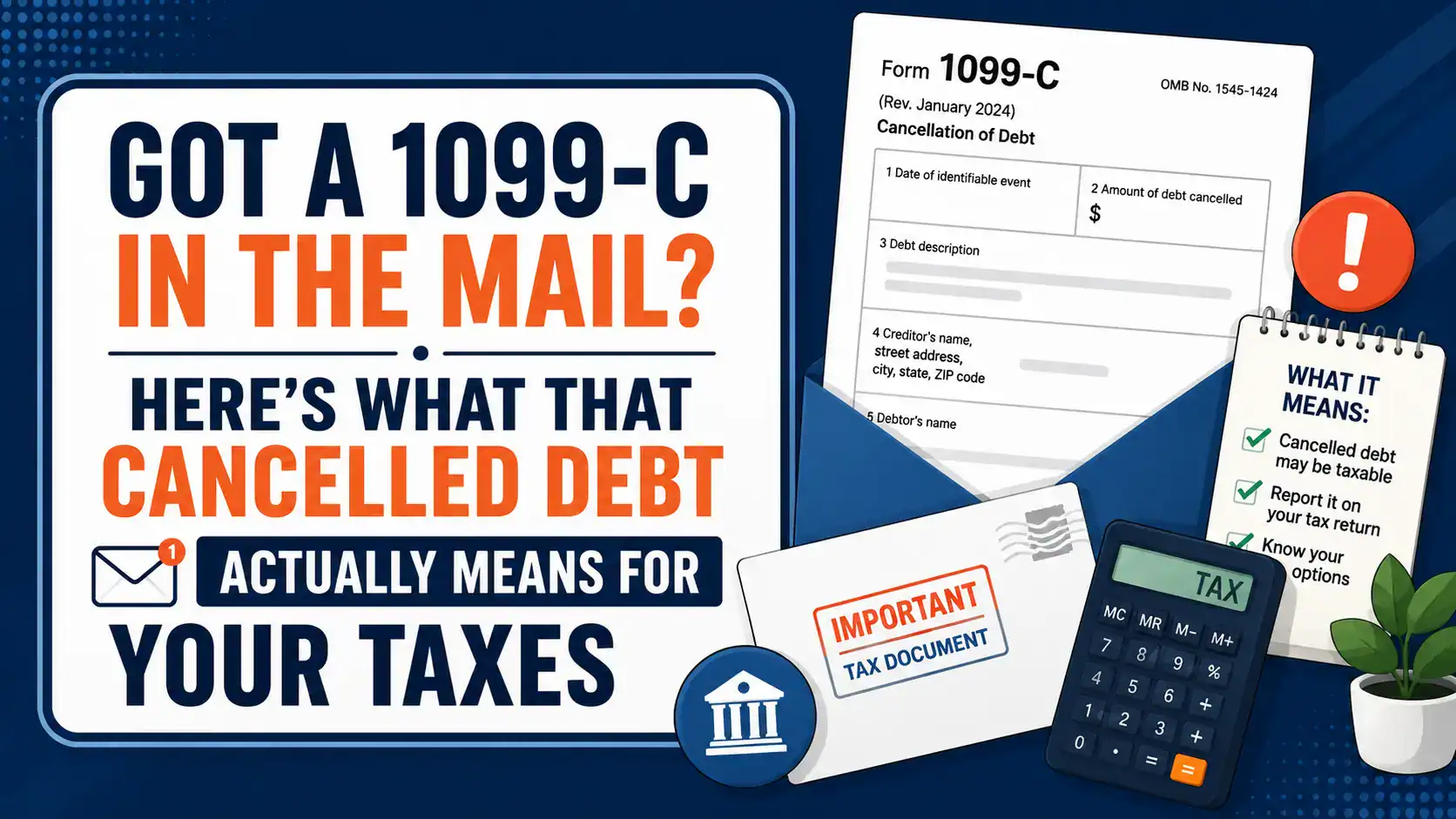
A 1099 C form, officially titled “Cancellation of Debt,” is an IRS information return that a lender or creditor files when they forgive or cancel $600 or more of debt you owed them. It’s their way of telling both you and the IRS: “we’ve stopped trying to collect this money.”
That’s the 1099 C meaning in a nutshell, it’s not a bill, and it’s not something you owe the creditor anymore. It’s a record of the fact that a debt was wiped off the books, and the IRS generally treats that wiped-off amount as income to you, because in a sense, you received a benefit equal to the debt you no longer have to repay.
This applies across a wide range of situations, including:
- Credit card debt settled for less than the full balance
- Personal loans forgiven by a lender
- Mortgage debt cancelled through a short sale, modification, or foreclosure
- Certain student loans discharged under specific forgiveness programs
- Business debts written off by a creditor or debt collector
What Is the 1099 C Form Used For?
The purpose of the form is straightforward: it lets the IRS match what a lender reports as forgiven against what you report as income. Specifically, it’s used to:
- Document the amount of debt that was cancelled or discharged during the year
- Identify the date the cancellation officially took effect
- Report any interest included in the cancelled amount
- Describe the type of debt involved, so the IRS can apply the right rules
- Create a paper trail the IRS can cross-check against your tax return
If a creditor forgives your debt but never sends a 1099 C, that doesn’t necessarily mean you’re off the hook, the tax obligation is tied to the cancellation event itself, not just to receiving the form.
Understanding 1099 C: The Boxes That Matter
Like most 1099 series forms, the 1099-C has a handful of specific boxes, and knowing what each one reports makes the whole form far less intimidating.
| Box | What It Reports |
| Box 1 | Date the debt was officially identified as cancelled |
| Box 2 | Amount of debt discharged or forgiven |
| Box 3 | Interest included in the cancelled debt amount, if any |
| Box 4 | A description of the debt (credit card, mortgage, personal loan, etc.) |
| Box 5 | Whether you were personally liable for repayment of the debt |
| Box 6 | Identifiable event code, indicating why the cancellation happened |
| Box 7 | Fair market value of any property, if the cancellation involved a foreclosure or repossession |
Box 2 is the number most people care about first, since it’s usually the amount that gets added to your income, but it’s not automatically the final taxable figure, which brings us to the next part.
How Does a 1099 C Affect My Taxes?
This is the question that matters most, and the honest answer is: it depends on your situation. In most cases, cancelled debt is treated as ordinary income and gets added to your tax return for the year the cancellation happened. But there are some important exceptions worth knowing:
- Insolvency exclusion: If your total debts exceeded the value of everything you own right before the cancellation, some or all of the cancelled debt may not be taxable
- Bankruptcy exclusion: Debt discharged through a bankruptcy proceeding is generally excluded from taxable income
- Certain student loan discharges: Some forgiveness programs, including specific public service and disability-related discharges, remain tax-free under current law
- Qualified farm or real property business debt: Special exclusions apply under specific IRS rules for these categories
If one of these exclusions applies, you typically need to file Form 982 along with your return to formally claim it. Simply ignoring the 1099-C and hoping the exclusion applies automatically isn’t the right move, the IRS still expects to see it addressed somewhere on your return.
1099 C Instructions: What to Do When You Receive One
If this form just showed up and you’re not sure what your next step should be, here’s a simple approach:
- Confirm the amount in Box 2 matches what you understand was actually forgiven
- Check the identifiable event code in Box 6 to understand why the cancellation was reported
- Determine whether you were insolvent immediately before the debt was cancelled, since this can significantly reduce or eliminate the taxable amount
- Gather supporting documents, bankruptcy filings, settlement letters, or a personal balance sheet showing assets versus liabilities, in case you need to support an exclusion
- Report the cancelled debt as income on your return unless a specific exclusion applies, and attach Form 982 if it does
Common Situations That Trigger a 1099 C
A few of the most frequent reasons people receive this form include:
- Negotiating a reduced payoff on credit card debt through a settlement company
- Losing a home to foreclosure, where the remaining mortgage balance gets discharged
- A short sale where the lender agrees to accept less than what’s owed
- Certain federal student loan discharge programs
- A debt buyer or collection agency deciding to stop pursuing an old, unpaid balance
It’s worth noting that debt collectors and debt buyers can also issue 1099-Cs, not just the original lender, which sometimes confuses people who don’t recognize the company’s name on the form.
Common Mistakes People Make With Form 1099 C
A few recurring issues worth avoiding:
- Assuming a 1099 C automatically means you owe taxes on the full amount, without checking for an exclusion
- Forgetting to file Form 982 when an exclusion genuinely applies
- Ignoring the form entirely because “the debt isn’t real anymore,” which can trigger an IRS mismatch notice
- Not keeping documentation of insolvency, which makes it harder to prove the exclusion later if the IRS asks
- Assuming a single 1099-C covers all cancelled debts, when multiple creditors may issue separate forms for different accounts
Getting Help With Your 1099 C Form
Debt cancellation situations are rarely simple, figuring out whether you were insolvent, whether an exclusion applies, or how to properly complete Form 982 takes more than a quick guess. If you’ve received a 1099-C and aren’t sure how it affects your return, financialdocsprovider can help you work through it accurately. Click here if you’d like assistance reviewing your 1099 C, checking your eligibility for an exclusion, and getting your tax filing done correctly.
Frequently Asked Questions
What is a 1099 C form used for?
It’s used by lenders to report $600 or more in debt that’s been cancelled or forgiven, so the IRS has a record of the discharge and can match it against what you report as income.
What is form 109 C if I was insolvent when the debt was cancelled?
You still typically receive the form, but you may be able to exclude some or all of the cancelled amount from taxable income by filing Form 982 to claim the insolvency exclusion.
What is a 1099 C form used for with foreclosures?
It reports the amount of mortgage debt discharged when a home is foreclosed on, along with the fair market value of the property if that’s relevant to the cancellation.
How does a 1099 C affect my taxes if I don’t file Form 982?
Without filing Form 982 to claim an applicable exclusion, the IRS generally expects the full cancelled amount to be reported as taxable income.
What is the 1099 C meaning behind Box 6’s identifiable event code?
It explains the specific reason the creditor reported the cancellation, such as a bankruptcy discharge, a settlement agreement, or the creditor simply ceasing collection efforts.
Final Thoughts
A 1099-C form isn’t a punishment for getting out of debt. it’s simply the IRS’s way of tracking a financial event that can carry tax consequences. The key is understanding whether an exclusion like insolvency or bankruptcy applies to your situation before assuming you owe tax on the full forgiven amount.
If you’d rather have someone confirm the numbers and handle the paperwork correctly, financialdocsprovider is here to help, click through whenever you’d like support getting your 1099-C and the rest of your tax filing sorted out.


Add comment